Society: Sunlit Valley vs Homestead — Two Cozy Minecraft Modpacks, Two Completely Different Games

The word "cozy" gets slapped on Minecraft modpacks like hot sauce on everything these days. Half the time it just means someone added a few flower mods and called it a day. But every once in a while, a pack comes along that actually earns the label — and right now, there are two that stand head and shoulders above the rest.
Society: Sunlit Valley and Homestead both sit in the cozy Minecraft category. They're both built on 1.20.1. They've both scored a perfect 5.0/5.0 on MMCReviews. And they're both actively updated as of early 2026. But if you actually play them back to back, they feel like entirely different games wearing the same outfit.
One is a Stardew Valley simulator built inside Minecraft's engine. The other is vanilla Minecraft cranked up to its most beautiful, most polished version of itself. Figuring out which one is for you comes down to a pretty simple question: do you want a game inside your game, or do you want your game to just be... better?
Society: Sunlit Valley vs Homestead
Society: Sunlit Valley — Stardew Valley Wore a Minecraft Skin and Nobody Complained
Chakyl built this Forge-based pack with one mission: recreate the Stardew Valley gameplay loop in Minecraft, and do it well enough that Stardew fans would feel right at home. Mission accomplished, honestly.
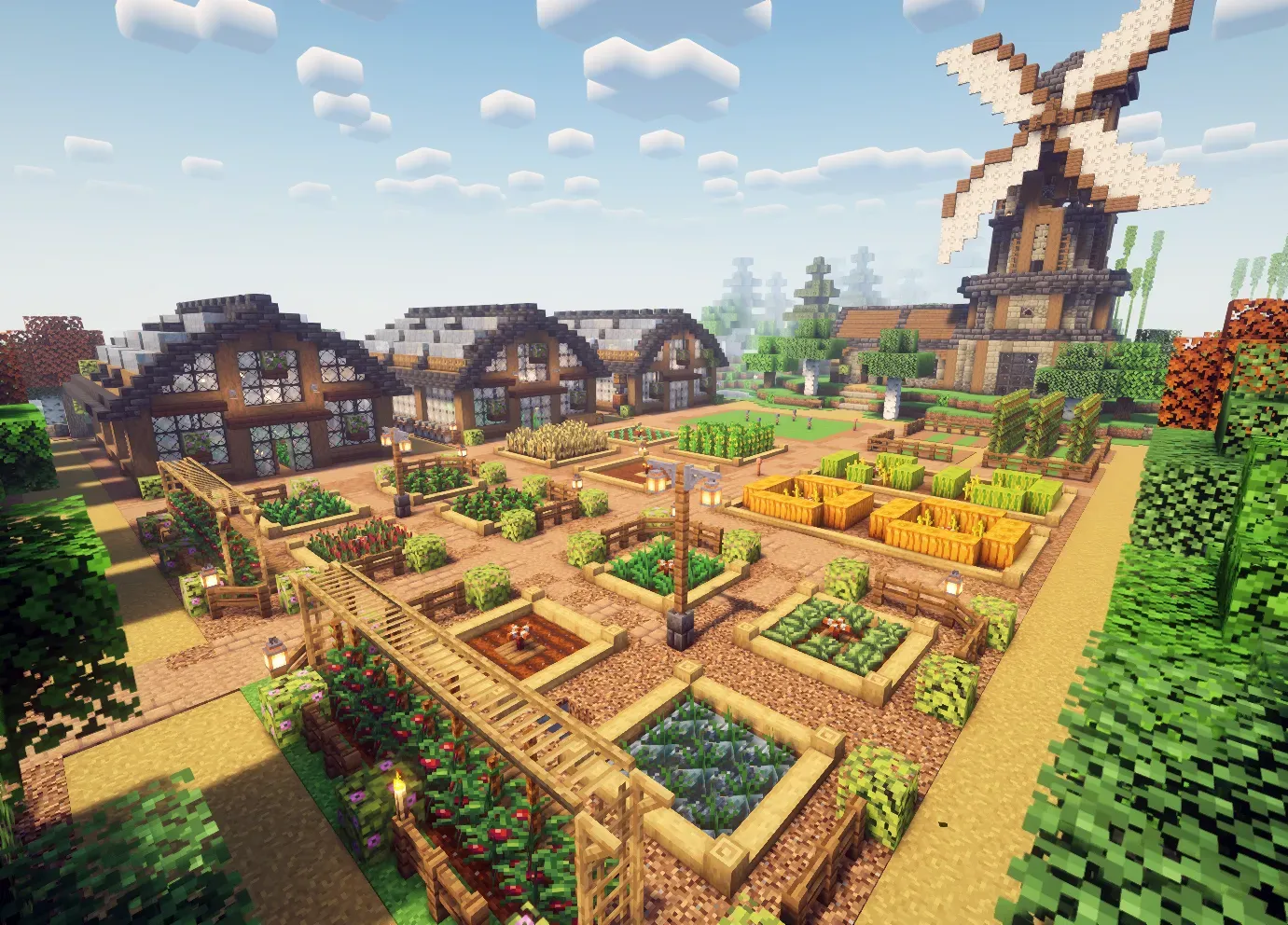
You farm seasonal crops, process raw materials into higher-value goods, and sell everything through a Shipping Bin that settles up every morning at 6 AM. Preserves jars, aging casks, mayonnaise machines, fish smokers — the whole processing pipeline is here. If you've ever opened a spreadsheet to calculate optimal wine aging times in Stardew, you already understand the dopamine loop this pack is going for. Grow it, process it, ship it, upgrade, repeat. The currency system even escalates from basic coins through iridium and neptunium to ancient coins, giving you a long progression runway.
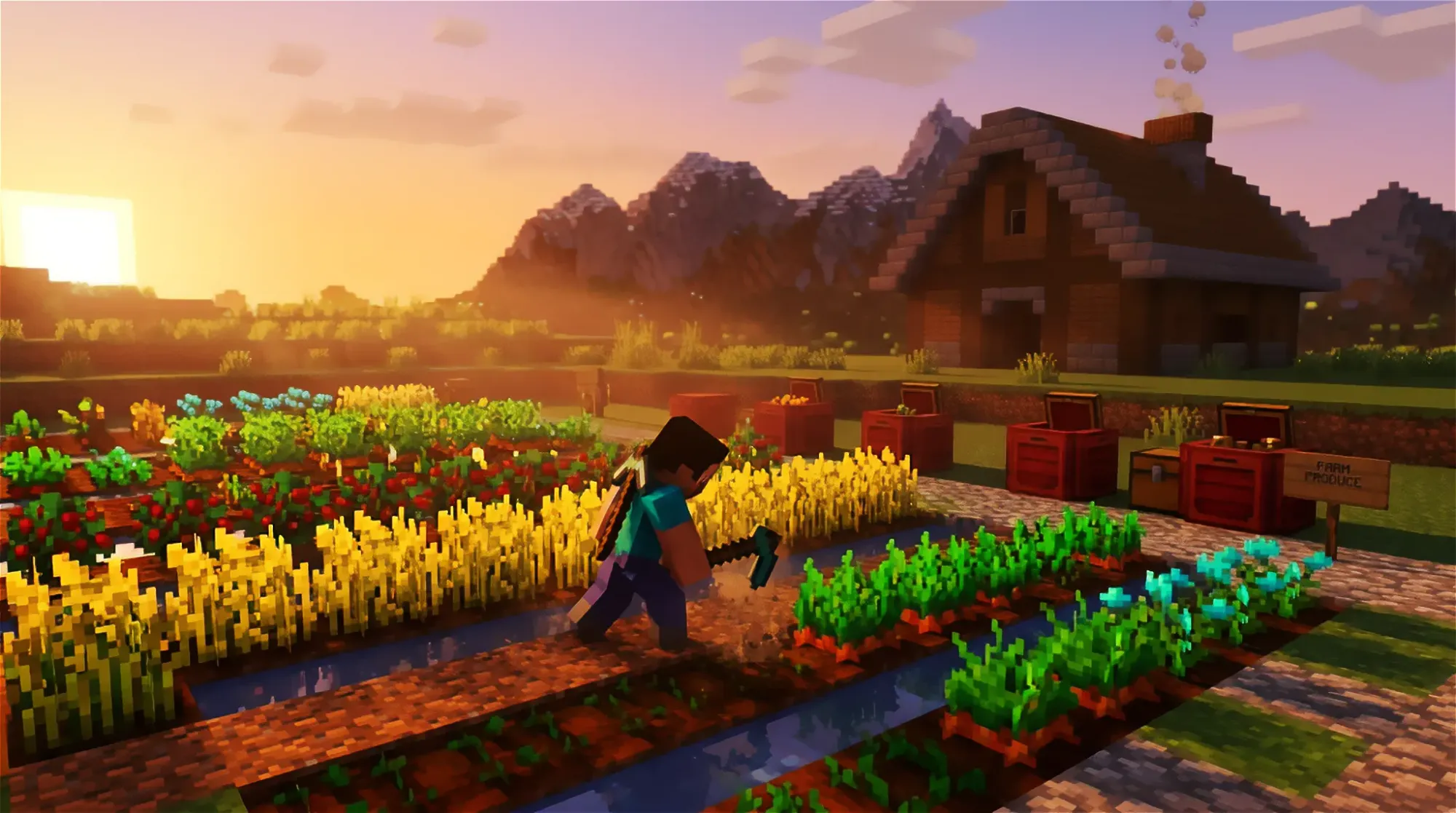
Society: Sunlit Valley
There are five custom skill trees — farming, mining, fishing, husbandry, and adventuring — each with transformative perks and mastery systems. The perks aren't just stat bumps; they genuinely change how you play. And this is where multiplayer really shines. When you're playing with friends, the natural role division ("you handle fishing, I'll optimize the farm, Jake does mining") gives the pack a co-op RPG feel that most modpacks never manage to pull off.
The pack has its own exclusive content too. Skull Cavern is a custom cave dimension that resets daily, where you mine iridium and prismatic shards while fighting through increasingly dangerous floors. There's a slime ranching system called Splendid Slimes where you breed and combine slimes for their plorts. Butterfly and moth collecting. Gacha plushie collecting. A community center-style bundle system. It's a lot of stuff, and most of it clicks together well.
The v4.0 update (February 2026) was a big deal. The NPC system got completely overhauled — custom trading GUIs, bank accounts, and up to 19 specialized villager shops were added. This directly addressed the most common criticism: that singleplayer felt lonely because of weak NPC interactions. Credit where it's due, Chakyl listened and delivered.
But let's be honest about the weak spots. Combat is basically vanilla-tier. If you're hoping for interesting boss fights or creative enemy design, this isn't your pack. Mining content outside of Skull Cavern is thin. The food system has tons of recipes but not much reason to use them beyond selling. This pack went all-in on the economic farming RPG fantasy, and everything outside that lane feels like an afterthought. That's a deliberate design choice, not a flaw — but it's worth knowing before you commit.
Homestead — What Vanilla Minecraft Would Be If Mojang Had 389 Mods Worth of Ideas
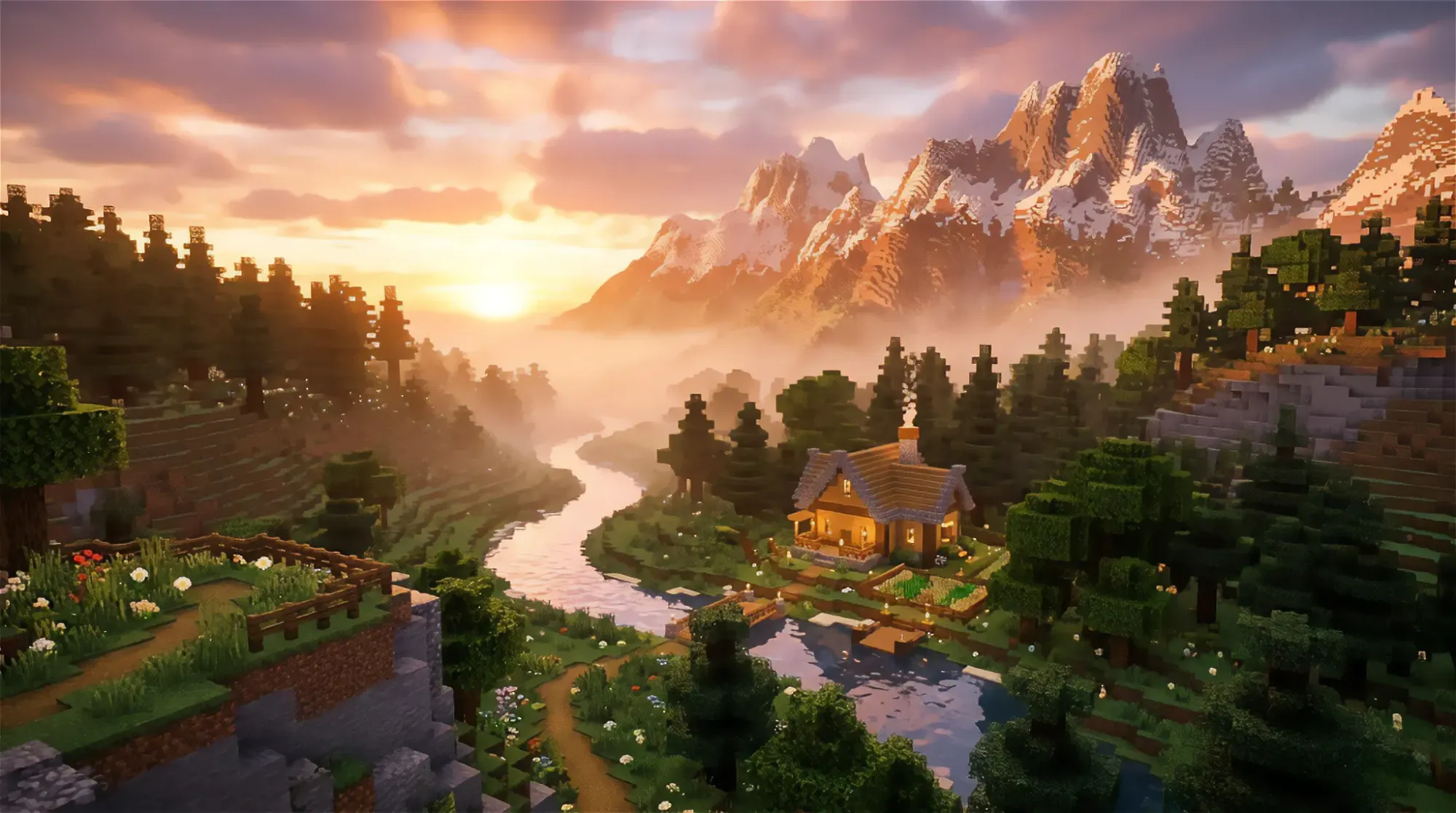
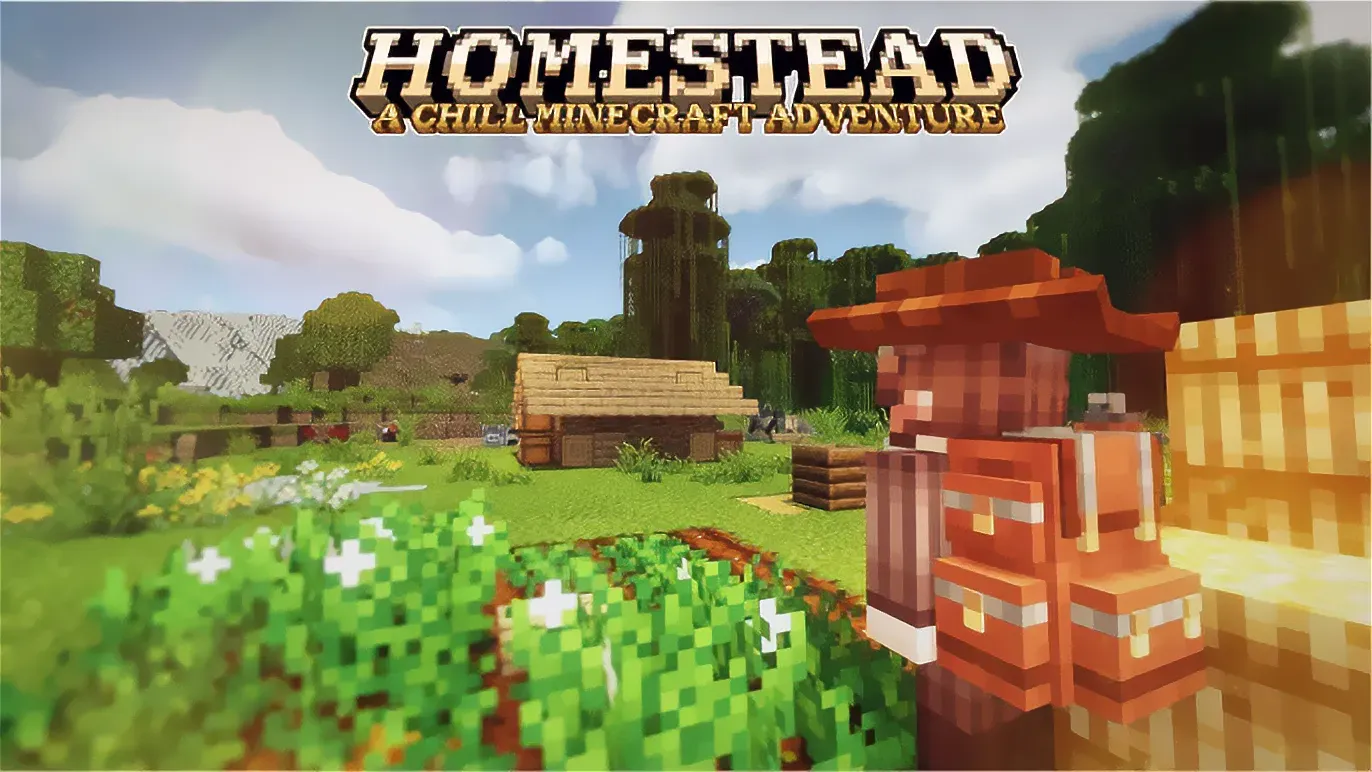
Toekimi and the CozyStudios team took the opposite approach with Homestead. Instead of importing another game's systems, they asked: what if we just made vanilla Minecraft as beautiful and content-rich as it could possibly be?
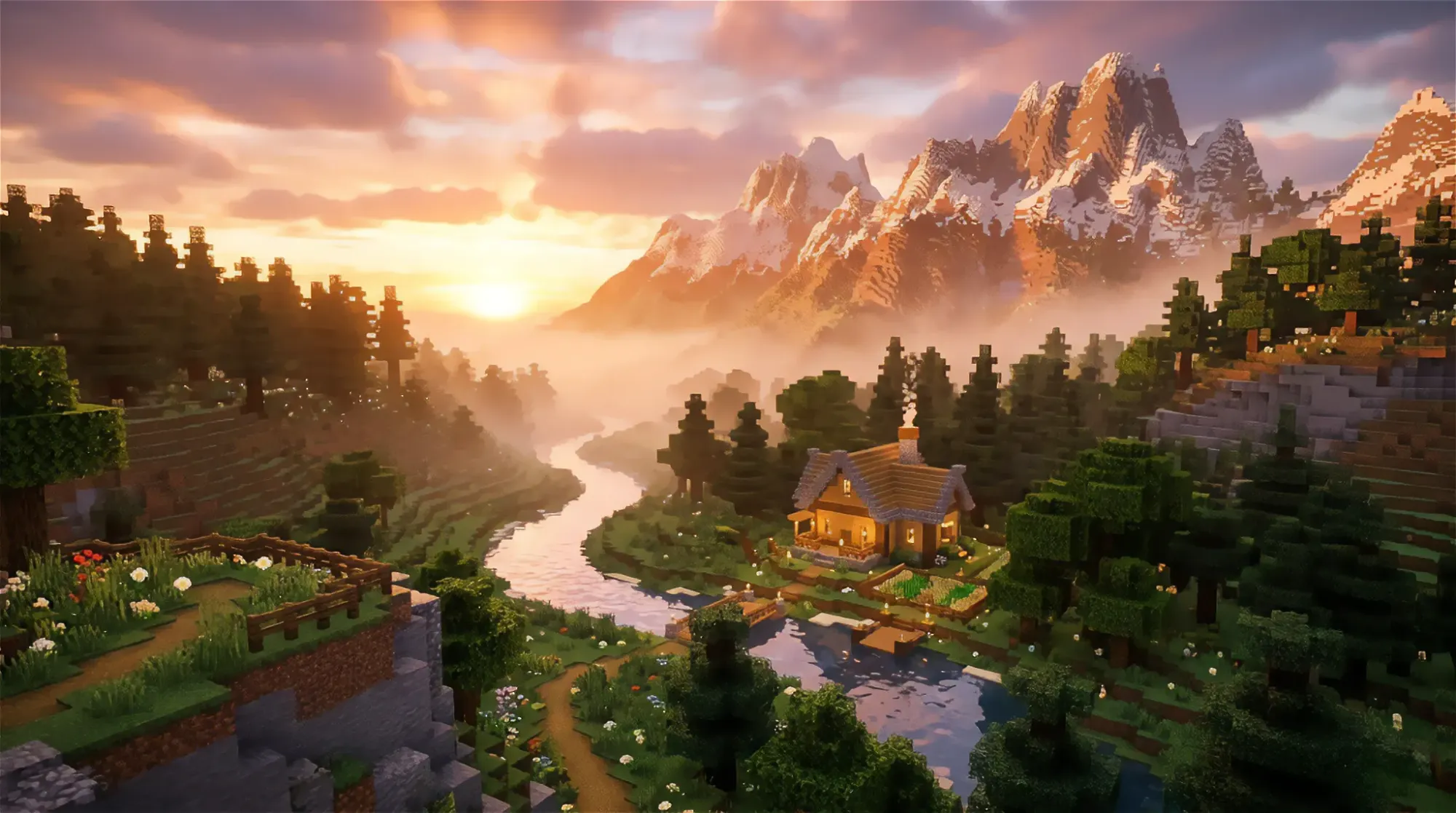
The result is a 389-mod Fabric pack that comes with Complimentary Reimagined shaders baked in — Low, Mid, and Extreme presets, no extra downloads needed. World generation uses Tectonic and Geophilic, and the landscapes they produce are genuinely jaw-dropping. Dense forests, sweeping meadows, rugged mountain ranges — it's the kind of terrain that makes you stop walking just to look around.
The design philosophy here is something like "purpose without pressure." There's an extensive questbook organized into chapters (Homesteading, Wild exploration, Deep mining, Magical secrets), and it gently suggests activities rather than demanding them. You're never told "do this next or you can't progress." Instead it's more like "hey, did you know these things exist?" Whether that's freeing or aimless depends entirely on your personality.
The gear system extends vanilla in a thoughtful way. There's an obsidian tier slotted between diamond and netherite, plus the Mythic Upgrades system that lets you craft gear from seven gem materials — ruby, topaz, peridot, sapphire, jade, aquamarine, and ametrine — each with its own playstyle bonuses. If combat isn't your thing at all, there's a dedicated peaceful progression path.
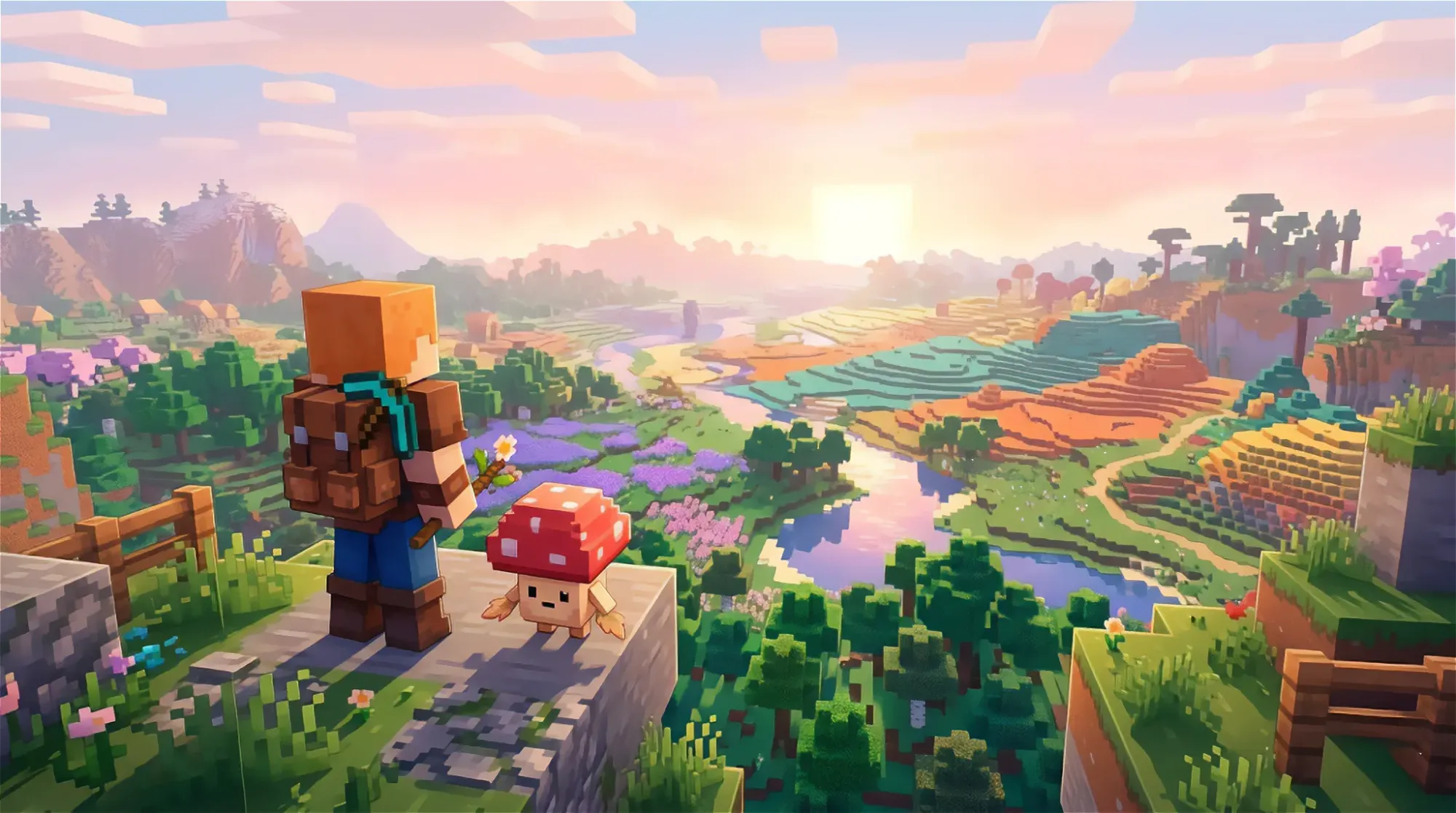
CozyStudios developed several mods exclusively for this pack. The standouts are tameable Mushling and Fernling companions — they follow you around the world, and they're genuinely endearing. There's also Serene Shrubbery for decorative flower crossbreeding and Squish for candy-related content. Small touches, but they add up.
Building options are arguably Homestead's single greatest strength. Between Chipped (hundreds of block variants), Twigs, Cluttered furniture, and Beautify: Refabricated, the sheer volume of decorative blocks and building materials is staggering. If building is why you play Minecraft, this alone might settle the decision for you.
Performance is surprisingly good for a pack this loaded. Community reports consistently mention 100+ FPS on mid-range hardware even with the built-in shaders running. Fabric's lighter overhead compared to Forge helps, but the optimization work clearly went beyond just picking a lighter mod loader.
The trade-off? Gameplay depth. MMCReviews gave the visuals a perfect score but rated gameplay at 3.0 out of 5, noting that the content skews heavily toward food-related mods. If cooking and food processing don't interest you, the pack can start feeling shallow after the initial wow factor of the world generation wears off.
The Core Difference — They Don't Even Agree on What "Cozy" Means
These two packs share a label but interpret it in fundamentally different ways.
Society: Sunlit Valley is a tightly designed economic treadmill. Every action feeds into wealth accumulation → skill unlocks → bundle completion, and the satisfaction comes from watching those gears mesh together. It's the Minecraft equivalent of a well-organized factory floor — structured, purposeful, and deeply satisfying if you're the type who optimizes for fun.
Homestead is a curated sandbox with gentle guardrails. The questbook suggests; the player decides. Its pleasure comes from wandering — building a cottage on a mountainside one day, exploring a dungeon the next, crossbreeding flowers the day after that. There's always something new to stumble into, even if there's no scoreboard tracking your progress.
Think of it this way. Society is a meal kit with step-by-step instructions. Homestead is a fully stocked kitchen. One tells you exactly what to cook and guarantees a good result. The other trusts you to figure out what you're hungry for.
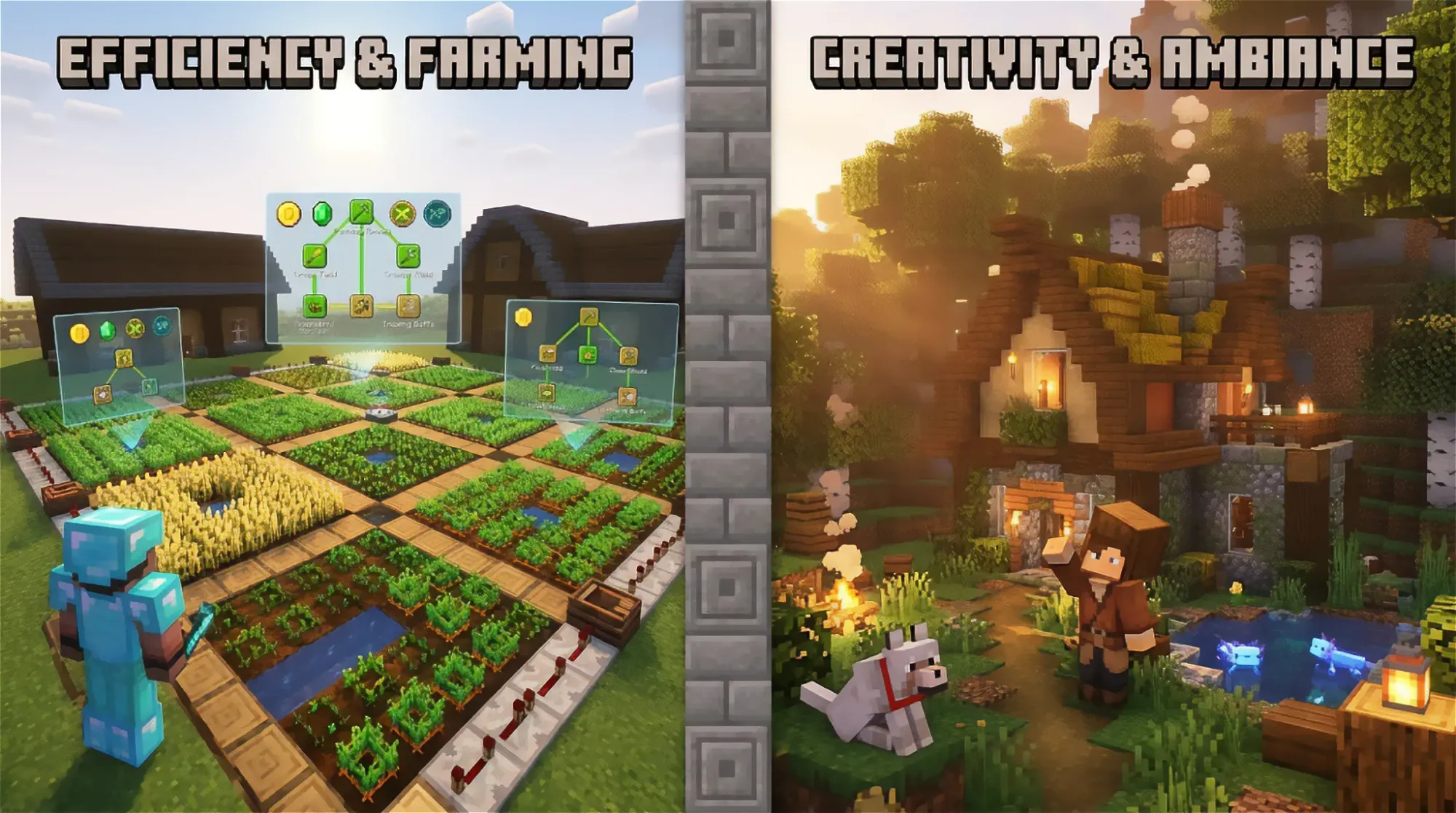
Some practical differences worth noting: Society runs on Forge with around 150 mods; Homestead runs on Fabric with 389. Despite the mod count gap, Homestead's Fabric base means it actually runs lighter — recommended RAM is 6 GB for Society versus just 4 GB client-side for Homestead.
Downloads tell an interesting story too. Homestead leads with over 1.5 million to Society's roughly 874,000. Part of that is creator Toekimi's YouTube following, and part of it is that "prettier vanilla Minecraft" has broader appeal than "Stardew Valley inside Minecraft." Society targets a specific audience and serves them incredibly well; Homestead casts a wider net.
Society has a full economy system and skill trees. Homestead has built-in shaders and dramatically overhauled world generation. Both include Create for automation, but inventory management differs — Refined Storage for Society, Tom's Simple Storage for Homestead. Society's quests are linear and tutorial-style; Homestead's are non-linear and exploration-driven.
What Players Are Actually Saying
Society's most detailed public review on MMCReviews (from aongreyfox, roughly 20 hours played) praised the pack highly while noting that singleplayer felt lonely due to limited NPC interactions. Vanilla-level combat, an unbalanced bounty board, thin mining content, and underutilized food systems were also flagged as weak points. The v4.0 NPC overhaul addressed the loneliness complaint directly.
Homestead has seen enthusiastic adoption internationally. On China's Bilibili, a video titled along the lines of "this is the only modpack you need in 2026" hit over 136,000 views, with a server setup tutorial reaching 45,000+. In the English-speaking world, TikTok reviews have been driving awareness — Roman Bearman's Society review alone pulled over 33,000 likes.
Both packs maintain active Discord communities that serve as their primary support and feedback channels. Neither has gained significant traction in the Japanese modding community, which tends to gravitate toward different modpack styles.
Before You Hit Install — Technical Stuff That Actually Matters
Society: Sunlit Valley recommends 6 GB RAM. If performance feels sluggish, try enabling "Deduplicate Location" in the ModernFix config — it increases loading times but improves in-game frame rates. Server hosting needs a minimum of 4 GB. A nice touch: the pack includes an optional phobia-friendly resource pack that tones down spiders and other creepy mobs. Small detail, big difference for some players.
Homestead wants at least 4 GB for the client and 8–12 GB for servers with three or more players. The bundled shader presets include options like Potato Shaders for lower-end hardware, so you can scale the visual fidelity to match your rig. Past patches have addressed broken quests, recipe conflicts, and inter-mod compatibility bugs. The current build (v1.2.9.4, January 22, 2026) is considered quite stable.
So Which One Should You Actually Play?
Both are excellent packs. You won't regret either choice. But your enjoyment will vary wildly depending on what you want out of Minecraft.
Pick Society: Sunlit Valley if you loved Stardew Valley or Harvest Moon and want that loop in a blocky 3D world. If optimizing crop layouts and processing pipelines sounds like a good Saturday to you. If you're planning to play with a small group of friends and want built-in reasons to cooperate. If you need clear goals and milestones to stay engaged. If you don't mind that combat and exploration take a backseat.
Pick Homestead if building is the reason you play Minecraft and you want the most extensive block palette available. If you want your world to look gorgeous out of the box with zero shader setup. If you're new to modded Minecraft and want guidance without obligation. If you mostly play solo. If you'd rather decide your own adventure than follow someone else's checklist.
Neither pack is for you if you want hardcore survival, expert-mode tech progression, or intense PvP. These are cozy packs. That's a feature, not a limitation — but it's worth being upfront about.
While a Society player spends their evening calculating optimal crop placement to maximize daily shipping revenue, a Homestead player is arranging decorative blocks in a mountain cottage while their Mushling companion watches. Both are valid expressions of cozy gaming. One is built on the satisfaction of systems clicking together; the other runs on creative freedom. Which one sounds like your kind of evening?